 |
| A Young Adolf Hitler |
Put
yourself in this situation: you were transported back in time to 1889 in
Austria-Hungary, Adolf Hitler's place of birth. Knowing full well what he did
to the millions of his victims, you have the opportunity to kill him as an
infant to prevent them from ever happening. Whether or not you kill Hitler as a
baby, you will be transported back to 2012 after your encounter without anyone
ever knowing what took place. You would have the opportunity to save millions,
but it would be at the cost of an innocent young life (innocent at the time, at
least). You would have blood on your hands of one, but you would also have
saved countless others. What would you do?
This
is a complicated question which fits directly into the definition of dirty
hands - when a person does something immoral for the greater good. It is a
conscious decision to compromise one's own morality for the sake of the general
population, much like Harry Truman's authorization of the nuclear strikes on
Japan during World War II. He understood that hundreds of thousands of lives
would be ended, but he did so under the belief that he would save millions of
lives from being lost in the grueling war. This is another key factor in the
idea of dirty hands - perspective. What one would define as being morally wrong
may be different from another person. Would Hitler think your murdering of him
would qualify as dirty hands? No. Why, you may ask? Because Hitler genuinely
believed what he was doing was for the greater good, and the person who killed
him would only be committing murder without any intent for the betterment of
society. Now, I can almost guarantee you that he would be one of the only
people who would think that, but it's true.
The Dilemma Truman Faced
Now,
can you think of any situations of dirty hands in today's society? There are
undoubtedly several, but let's just focus on one. The first situation that
comes to mind is Guantanamo Bay, Cuba, at least for me. Let's consider what
happened. Men believed to be terrorist organization leaders were imprisoned and tortured for years by the American government, something only possible by law
because of its location outside of the United States. The torturers did their
jobs under the assumption that they would be saving lives by using the
information they gathered. Did they? Possibly. Was it moral? Probably not, but
in their minds, it had to be done.
 |
| Prisoner at Guantanamo Bay |
What's
important about the concept of dirty hands is the reward versus sacrifice
ratio. Do the benefits of your sacrifice outweigh the downfalls? Again, it's a
question of perspective, but since the whole concept of dirty hands is a
teeter-totter with the pivot point being perspective, it's one that fits right
in when talking about dirty hands. Obviously, it would not make sense to kill
dozens of people just to save one life, and the same applies to other
situations, so the benefits and downfalls must be weighed before decisions can
be made. in order for the greater good to be served, the positives are required
to outweigh the negatives.
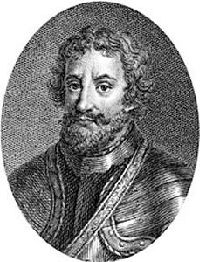 |
| Macbeth of Scotland |
Consider Macbeth for a moment. He murdered Duncan to gain his place as king of Scotland. Did he have dirty hands? The simple answer is no. While he did commit a crime, what he was doing was for his own benefit, not for that of Scotland. He and Lady Macbeth were the only ones who actually benefited from Macbeth's crowning, and even so, this caused their deaths in the end. Lady Macbeth was consumed by guilt because of her actions, knowing that they were immoral, and there was no salvation in the thought that her actions were for the greater good, which is what many of today's politicians have when they are forced to deal with dirty hands.
 |
| Courtesy of bostinno.com |
Let's go back to the situation I posed earlier concerning Adolf Hitler. Could
you do it? Would you be able to sacrifice your own moral code? Some of you,
yes, others, no. That's because it takes a special kind of person to be able to
do these kinds of things. Not everyone can live with dirty hands, and even so,
it's just a one-time thing. You can't go around killing a bunch of people you
think are bad because you will eventually lose the concept of morality. I
personally don't know if I could do it. My morals are extremely important to me,
and I always follow them, and not for anyone other than myself. I know it would
probably be the most logical action to kill Hitler, and it would have the
greatest reward:sacrifice ratio, but inside, I don't know if I could do it. Let
me ask you again: could you? Could you live with blood and dirt on your hands, even if you knew what you were doing was for the greater good.

I really enjoyed this post, especially the situation you posed involving Adolf Hitler. Although I am certainly biased (I lost family members in the Holocaust), I think just about anyone should be willing to kill Hitler before he had the chance to grow into the monster he was. Millions of lives are without a doubt more valuable than one. One thing to consider: When we are transported back to 2012, everything would be different (the Butterfly effect), especially for me, because I would probably be living in Europe as opposed to the United States.
ReplyDeleteThe scenario in which you discussed about killing baby Hitler reminds me of, and is exactly like the movie I just saw called "Looper." This is a Bruce Willis movie in which time travel is made possible in the future, but only the mafia can utilize it. Bruce WIllis tries to go back in time to kill a man that is very evil in his time that took his wife. This is also a problem of dirty hands in which Bruce Willis is willing to kill an innocent child to save his wife in the future.
ReplyDeleteThis post reminded me of a book that I read in high school, "Justice" by Michael Sandel. This book also deals with the subjectivity and the grey area of morality. I agree with your stance on that if it really came down to me killing Hitler, even though knowing that he would cause a catastrophe, I don't know if I could possible murder a baby Hitler. However, that being said, the thought that killing the bad people can alter the morality in a person, I think may not be true. The thing is, you said yourself that you would stand by your morals no matter what the circumstances, right? I think by killing the bad guys, this fundamentally-rooted morality would not be manipulated so easily. However, the major disagreement I have with you is that you sound so sure of yourself that you are going to follow your morality. I think that the society will push all of us least once in our lives to break the codes which we hold dearly to our hearts. Most people seem to fail and some succeed. I don't mean a major corruption or money laundering, but even in everyday lives, we face "Should I just sparknote this?", or "should I just ask someone to do this work and I finish the rest and we could share?" If you actually think that cheating is immoral,which most people do, I bet that almost everyone on Earth had gone against their morality. I really liked your post, like mentioned above, particularly bringing Hitler into the topic of dirty hands. I never even thought of going back in time and having the option of killing Hitler or not.
ReplyDeleteMitchell,
ReplyDeleteThis was a great post about the concept of dirty hands and different scenarios. I agree with Andrew do to personal bias as well and I would kill Hitler in order to save millions of lives. I also agree with Andrew that this will cause a butterfly effect, just like in the Family Guy episode where evil Stewie kills Da Vinci. When it comes to Harry Truman, I think he did the right thing because we were in a vicious war with Japan that wouldn't have ended until we took over all of Japan, and it would have costed many more lives due to the fighting style of the Japanese. A call to bomb Hiroshima and Nagasaki was the right choice and even though many lives were lost, we did save many more American lives and possibly more Japanese lives if we had to invade Japan. While killing many to save one, I disagree on the terms that there could be a hostage crisis where we need to kill many evil men to save someone who is important to us. I think morality is more based on if we are killing innocent lives than lives who have also committed sin. While it is wrong to kill, to kill someone who is also a killer is more justified than killing innocent people. While I may be contradicting myself when it comes to Truman, Truman did what was best for the American people, and many Americans would have probably done the same given the circumstance.
You make many good points and provide some interesting illustrations. Personally, I agree with your statement that dirty hands is always subject to a perspective. Because human beings act on self-interest, many of our actions/perspectives on the national or geo-political scale can in fact be traced back to our own individualistic concerns. While I by no means defend Hitler's actions, historical records tell us that he actually believed that he was doing a service for humanity. I posit that the actions of our political actors is subject to a moral void in this way - it is consequently problematic that we may justify morally questionable and dangerous political means through a promise of better relative ends. Personally, I would support the killing of baby Hitler but through an argument made by John Locke: Hitler, in committing genocide and crimes against humanity, broke his social contract with the international community and must consequently exiled and punished by society. That we have this prior knowledge, the ability to time travel is simply the instrument in exercising this punishment of a societal offender.
ReplyDeleteIf I was faced with the situation you described, the question I would consider would not be, can I kill Baby Hitler, but should I? Obviously letting him live would result in some pretty negative things happening, but maybe killing him would result in someone worse, and perhaps more competent filling his shoes. Maybe this someone would influence events such that the Holocaust happened anyway but that Germany would also win World War 2, whereas with Hitler in power, the Holocaust happened, but at least Germany was defeated in the end. You can't really definitively predict how things would happen differently if Hitler hadn't lived, the butterfly effect and all that. The question of dirty hands in this context confuses me, not because of the way you’re applying it, but because I guess the idea of dirty hands in general irks me. If something is the right thing to do, I don’t see that it can also be morally wrong. If we assume that killing Baby Hitler only has positive results, and that these positive results are not so miniscule as to be outweighed by killing him, then surely doing so is the right thing to do and in my opinion ought to have no negative connotations attached to it. There’s a natural, biological aversion, I think, to killing a baby, but that doesn’t mean it can’t be the right thing to do, just that under normal circumstances it usually won’t be. It also doesn’t meant that when circumstances aren’t normal and it is the right thing to do, there needs to be some negative moral connotations attached to it because of dirty hands.
ReplyDeleteThis was a great post. By bringing up many different situations that potentially display dirty hands, you effectively present the idea of the bad vs. good ratio of actions with prospective at its center. Before reading this post, I had not really thought about the component of prospective in the dirty hands problem. In almost all cases of dirty hands, one side will find that the teeter-totter weighs on the side of bad and the other side will find that the teeter-totter weighs on the side of good. So who can be the judge, if anyone?
ReplyDeleteIn regards to your question, I feel that most people, including myself, would say that they would with out a doubt take the life of Hitler as a child. However, I would argue that in the actual situation we would not be able to actually do it, as we posses morals that do no allow us to commit such actions.
May i suggest a different alternative to killing Baby Adolf? Could we instead bring someone into his life or take someone out who made him into the monster he became? I'm not saying take him out like "The Godfather" or anything, but somehow minimize the effect they have on young adult Adolf. This way Adolf does not murder millions and we do not get our hands dirty. Maybe this is a copout and a way of going around the problem, but sometimes, I feel like our leaders should look for this third option. Politicians do need to be willing to get their hands dirty, but sometimes they seem far too eager for this to occur. If there is an option that does not go against our morals and saves lives, shouldn't we take it?
ReplyDelete