Showing posts with label Equality. Show all posts

Thursday, December 6, 2012

The Team, The Team, The Team

Recently, in my English 125 class, we read a piece by the American writer Louis Menand. In it, Menand wrote, "Leagues and tournaments draw larger audiences to a sport, as athletes and teams start to be imagined as representing cities and, on a bigger stage, nations." This immediately got me thinking; how much do sports and teams actually represent nations? Why do the economic superpowers of our world dominate the international sports scene? Given that this is a course focused around political theory, I figured this would a be an interesting topic to touch upon. In fact, I do believe that sports, teams, and athletes have a major impact on not just representation of nations and politics, but human nature as well. Maybe more so than anyone ever thought.

Sports have always been an outlet for people to express their innate competitiveness, and ancient cultures even used sport as a means of war.
Not your typical 'Lax Bros'
http://www.personal.psu.edu/mab5448/lacrosse.jpg
 Society does not allow us to openly impress our aggression on others without consequences, so sports have been the ideal alternative. This medium allows us to openly express our deepest roots of human nature: dominance over others. Winning and success is what drives all of us, and if anyone says they believe otherwise, they're, well, wrong. Thus, sports is the epitome of human nature. It allows people to pursue success and happiness. The same can be said for the fans of sports; those individuals who spend countless hours yelling at their television screens when their favorite team's quarterback (say, oh I don't know, maybe Eli Manning?) overthrows a receiver time and time again. I am one of those frustrated fans, but before I go on a rant about my team (cough cough the New York Giants cough cough), I'll stop myself. However, there is a method to my madness. Why do we loyal fans have such heartbreak when our team loses? I mean, c'mon, we aren't the ones playing. The answer is acceptance. As human beings, it is in our nature to find acceptance with others, and in this specific case, a sports team. We humans love devoting ourselves to a higher cause, something bigger than ourselves, and sports is a terrific outlet for that. Still, this human nature of devotion and conformity to a team can lead to deadly consequences.

Take the Hillsborough Disaster for example. In the British Premier League, the highest level of English soccer, Liverpool was playing Nottingham Forest in the 1989 FA Cup final. Liverpool is one the most supported teams in all of sports, and thus, the game at Hillsborough Stadium was overcrowded with fans. During the game, the supporters of both teams became rowdy, and even violent with devotion. The influx of more people caused part of the stadium to collapse, leading to 96 deaths, and 766 other injuries. It now remains as the most deadly stadium accident in all of British history. What does this tell us? That sometimes unwavering devotion to a team can lead to tragedies. The same can be said for nations and politics. A leader who becomes obsessed with his country and its sole success will turn into a power hungry monster, only looking to spread his own sphere of influence (does Hitler ring a bell?).

Maybe that's an extreme example, but regardless, certain sporting events over the course of modern history have lead to major political and social changes. Some of the greatest such moments have occurred during a special event every four years that leaves us teeming with pride, and forces us all to come together: the Olympics.

Of course we all know about the "Miracle on Ice" in the 1980 Winter Olympics, and how a bunch of scrappy American college kids beat the superstar Soviets. In the wake of the Cold War, this went far beyond the game of hockey. 
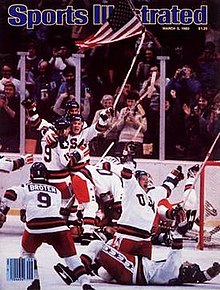
"Do you believe in miracles? YES!" -Al Michaels
http://upload.wikimedia.org/wikipedia/en/thumb/b/bd/Sports_Illustrated_Miracle_on_Ice_cover.jpg/220px-Sports_Illustrated_Miracle_on_Ice_cover.jpg

But still, I'm talking about events that reshaped the way we look at politics and society today.

For instance, take the 1936 Summer Olympics, hosted in Berlin, Germany. During this time, Hitler was mounting his rise to power through the use of propaganda. Such tactics included undermining all races of color, while placing the Aryan race above all others. To Hitler, the Olympics provided an opportunity to profess the "superiority" of the Nazis and his ideal race. Yet, Hitler hit a bit of a speed bump, to say the least. Queue Jesse Owens. The African-American won four gold medals in the 100m, 200m, long jump, and 4x100 relay. By being the most successful athlete at the 1936 Games, Owens not only disproved Hitler (talk about a slap to the face), but he single-handedly brought light to the idea that, "Hey, maybe whites are not superior." Unfortunately, this lead to Hitler increasing his efforts to eradicate all non-Aryans, highlighting the impact sports can have on a nation.

Another example of how political endeavors are started by sport events was the conflict between Israel and Palestine that arose due to the 1972 Munich Olympics. During the Games, Palestinian terrorists, known as Black September, tragically captured and killed 11 Israeli athletes. This lead to an uproar in the national community, especially Israel, who sent special forces to kill Palestinian officials and terrorists. The tragedy not only strained Israel-Palestinian relations even further, but also lead to the creation of a number of European counter-terrorism groups, such as GSG9 and GIGN.

Social reforms are no stranger to the Olympics either. During the 1968 Summer Games, in the midst of the African-American Civil Rights Movement, African-American athletes Tommie Smith and John Carlos won the gold and bronze medals, respectively, in the 200 meter dash. Upon receiving their medals on the podium, the two bowed their heads while raising their fists in the air, as the "Star-Spangled Banner" played in the background. Smith and Carlos were representing the Black Power movement, and this caused a great amount of distress in the US. Today, however this action is remembered as one of the key moments in the Civil Rights Movement, as it politicized the Olympics, and will remain so forever.
Tommie Smith (center), and John Carlos (right)
http://upload.wikimedia.org/wikipedia/en/thumb/c/c8/Carlos-Smith.jpg/220px-Carlos-Smith.jpg

As you can see, in America, sports have been an invaluable tool for building racial and social reforms. Whether one looks at events like Jackie Robinson signing a contract with the Brooklyn Dodgers, or the 1991 US Women's team winning the Women's World Cup, sports have proved to be a bridge for equality. Yet, even in other countries, sports have followed a similar path. Look at South Africa. Under the apartheid for years, South Africa was split between the majority blacks and the whites, who controlled the country. However, as the apartheid was ended, the 1995 Rugby World Cup symbolized the new change in the country; segregation would no longer be tolerated. All men were equal, and a new era had arrived. This was symbolized perfectly when the black president, Nelson Mandela, awarded the trophy to Francois Pinear, the white team captain. This was portrayed beautifully in the movie "Invictus," which I encourage all of you to watch:


Just as sports can end conflicts, it can just as easily start them...even wars. La Guerra de Futbol, also known as "The Soccer War," took place in 1969 between El Salvador and Honduras. The two countries were pitted against each other in a qualifying match for the 1970 FIFA World Cup. El Salvador defeated Honduras 3-2, but due to the high tensions between the nations, an all-out war erupted. Why did a soccer match cause this? Well, at the time, Hondurans had an overall resentment towards migrant El Salvadorians who were "stealing" the Hondurans' jobs. The loss was the last straw. After four blood-filled days, 1000 people had been killed, and thousands more injured. 

At this point, one can clearly see the overlap between sports and politics. But sports can impact us in religion as well. Even in a seemingly peaceful aspect of life that has nothing to do with athletic competition, there is still no escape. Sports has had a stronghold in representing religion for years, and can be given credit for starting the oldest rivalry in sports: Celtic vs. Rangers. The battle between the two Scottish teams, a battle between Protestants and Catholics, still rages on today, and has a significant impact on Scottish governmental policy in regards to the two factions.

So why do we not recognize sports as a valid political medium? Time and time again, we see examples of how sports can represent nations as a whole, and that they severely impact sociopolitical factors as well. Sports are more than just "games," and teams are more than just "athletes." Those teams represent something more than words can describe. Next time you watch your favorite NFL team play, ask yourself why you care so much. Next time you watch the Olympics or the World Cup, ask yourself why it really matters. You may very well be watching an event that rewrites the course of history.

In closing, watch this video....
...and ask yourself what those people are actually cheering for, and why it feels so damn good to be an American.


Saturday, November 24, 2012

Rousseau's Humanity


Courtesy of michaelrobertmiles.com
We've talked about Hobbes, and we've talked about Locke, but I personally find Rousseau's concept of the state of nature to be the most intriguing. Rather than focusing on the importance of exiting the state of nature like Hobbes and Locke (and their emphasis on the social contract), Rousseau believed that humans were in their purest forms at the state of nature. People worked to satisfy their own needs, and the main reason for inter-sexual relations was to reproduce. There were no emotional attachments or guidelines that decided what a person needed to do. Basically, it would be just like a one-night stand. The only differences between people are physical ones. If you can beat up some guy who's weaker than you, then that's the only way you can be above him (not economically, socially, etc.). 


Equality Among Humans, courtesy of nusu.co.uk
   Now, I can't say whether or not this is true, but it's something to think about. Before society was formed, before there was a language similar to the ones we use now, what was there? We were apes. Do apes travel in packs? No. They work by themselves (not by oneself, but rather extremely small groups of only a few) to survive. I can't say that this sounds unpleasant; the thought of no debts, no social obligations, no responsibilities to anyone other than yourself sounds pretty tempting, but so much would be lost. We wouldn't have fancy (or any, for that matter) clothes, cars, food, etc. We would only have access to what we are able to make for ourselves. But what's crucial is that when we're in the state of nature, we have freedom and equality.

Social Hierarchy, courtesy of us.123rf.com
   Where Rousseau differs from Hobbes and Locke, however, is what he thinks humans should do from the state of nature. According to Rousseau, once people leave the state of nature, inequalities begin to rise. Remember that guy who you were able to beat up two years ago when you were in the state of nature? Now he owns you. He was able to assert control over other people through means other than just physical, and now he owns every corn field in the tri-state area. He's an economic powerhouse, and he has a place in the government because of his property. Just because you're stronger than him doesn't mean you can overpower him anymore. That's right. The guy who is physically weaker than you can control you. Rousseau argued that this was, basically, bad. Humans are no longer equal to one another once they leave the state of nature, and this continues right until the point where there's one person who rules over anyone else. When you think about it, it's basically true. No matter how much you work, there will almost always be someone who is more powerful, richer, and better than you. Sure, there are some exceptions, but even then, those are the people who are at the top of the hierarchy that control everyone else.

An Amish Family, courtesy of wordpress.com
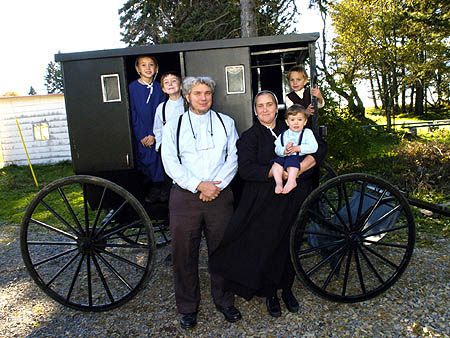
   It's not all bad, though. Once people leave the state of nature, they begin to work together. Families form, and communities are built. Nobody is alone, and nobody can live by providing everything for themselves. Now, the closest thing I can come up with that resembles this community that isn't quite a civil society would be an Amish town. About thirty people (more or less depending on where it's at) who each specialize in something so that the whole community can live together in harmony. Nobody just works for themselves. There's a farmer, a baker, a cattle rancher, and more, but they work for each other. If a person wants butter, they go to a friend they know who makes the butter rather than buying it from a massive corporation that employs people they don't know. I'm not saying this is a perfect example of a pre-civil societal community, but it's the closest one that I know of that everyone is familiar with.

Captain America, courtesy of Marvel and justjared.com
   Actually, as I'm sitting here watching The Avengers while eating popcorn with my best friend, I realize that The Avengers is also a good example of this sense of community. Captain America is the leader, but he's only the leader from a strategic standpoint. He's not more valuable than Black Widow, the Hulk, Thor, Hawkeye, or Iron Man; he's only the "leader" because he can make the tactical commands, not because he can control everyone else, not because he's richer than anyone else (that feat goes to Tony Stark), or any other reason. He doesn't assert his power over his team; they all work together to accomplish common goals. Outside of the team, each member has his (or her) own advantages, but once the battles start and the team assembles, they work together.

   With all this considered, where would you live: Locke's state of nature, the community stage, or the final stages of civil society? Me, I would probably choose the community stage because there's equality and some aspects of the state of nature while also being able to work together with others. That doesn't mean I'm going to join an Amish community, though (for the record, if I was asked to join the Avengers, though, I'd do it in a heartbeat). What's important to me is my family and friends, which is why I couldn't live in the state of nature, but I am also a fan of being equal to everyone else, and the closest to that would be the community stage.

Below is a clip where Captain America gives orders to the team. He does not assert his power over anyone else; he treats them as equals because they are, yet he also tells them what would be best for the team. They follow his commands because they know that it is best for the city, not because they know he has power over them. He fights with them rather than staying away from the battle and calling orders like most leaders do. This is the ideal sense of community that I described:


Wednesday, October 17, 2012

Locke, The Modern Day "Philosophical" Stoner

Being on a quite liberal campus such as the beautiful University of Michigan, weed isn't exactly brushed under the rug. As I randomly roam the streets, whether in between classes or various night life activities, that "good-good" aroma catches the nostrils at least four times a week. If I were to ask some of my MSU "friends" what they were to think about the AA, they may reply (this is actually a quote), "you're all a bunch of stuck-up hippie stoners." What I replied, however, may not be blogger-friendly but let's just say we better win this Saturday or I am going to be in quite the predicament. Ignoring the week of Hash Bash, where the laws are even more relaxed for the sake of celebrating the fight on cannabis restrictions and to remember the cultural activist John Sinclair, Ann Arbor isn't all too out of place in the grand scheme of things.
Starting to slowly connect this to Locke, however, I bring up the mary j to state the general observation: We all know "that guy" who smokes some kush and instantly becomes modern day Socrates, or Sigmund Freud, or Tupac. After a few hits of the J, this weed user simply gets it. They instantly land in someone else's shoes. They know the pain of the oppressed (and all the solutions to stop it). This plant enables the now-philosopher to not only eat incredible amounts of junk food, but also to see through the clutter towards the final path of what it means to be "freeeee man" and to have "world peace bro"(reread in your best stoner voice).
PsYcHeDeLiC mAn! or Mr. John Locke?
Finally, time for the good ol' Locke. This man, even if his ideas and theories have shaped the nation we are in today, speaks from a hypocritical outlook. Locke states very bold claims on why people enter a state of nature, why people agree to leave, and many things in between. Being of rich family stock, earning a master's degree and attending Oxford for medical practices, and working very high-class jobs, a state of nature is a very alien idea for Mr. John. His life of being on the top of the food chain is very far from "a state of equality" where men are "born to all the same advantages of nature, and the use of the same faculties" where they "should also be equal one amongst another without subordination or subjection." He even adds in the fact all men are generally good. Tell that to the hell-on-earth Somalians fighting for their life's in their state of nature. 
Now, don't get me wrong, I am not saying the guy isn't right on some of these matters. There is a reason he is being discussed in the first place in basically all political science classes ever. What I am saying, however, is why does this guy know anything about the state of nature? He is an upperclass rich dude, not some peasant who has to struggle for life on a day to day basis. Nowadays, we blast people of the top class trying to connect to those of lower socio-economic status (Romney anyone?). Do it a few centuries ago, however, and we have a philosophical genius on our hands. And no, I am not saying Romney is trying to redefine some theory of the status of life through his policies (come on now, really?). Anyway, what I am getting at is modern times is all about experts in the field saying things about, well, their field. We wouldn't trust a doctor of medicine projecting the stock market, and we wouldn't have random peeps diagnosing hospital patients. 


How does this all tie in, you may be wondering? Well, "that guy" is a dude smoking pot who pretends to know everything about anything, even if he hasn't the slightest bit of experience in his subjected field, and Locke is a rich guy holed up in Amsterdam (liberal in more ways than freedom of press, mind you) writing about, essentially speaking, a life he never has to worry about living. If I really wanted to know about life in a state of nature, wouldn't I consult some guy from war torn, government broken Somalia? I mean, look at the place: 


a loving state of nature, eh?

My final point is this: I like people to preach from a podium of experience. If they haven't lived in a scenario, how can they tell us the infrastructure of the damn thing? Locke, in the bluntest of ways, stumbled upon a theory that fits. Who knows how many other countless old white dudes tried to write about the same topic and aren't given a second thought today. Locke just happened to be that one-in-a-ton "guy" who's blabbering mouth landed them somewhere. For all we know, the next Locke could be at our very own Hash Bash this coming year, lighting up right under our noses.